COAST
Swordfish Umai, Weaver Ant,
Coconut & Sago

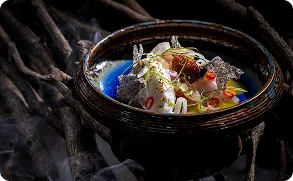
Our voyage now descends the mountains and arrives at the coast of Sarawak, where rivers meet the sea. Envision the mangrove-lined shores and sandy beaches – the realm of fishermen and seafarers. This bold course, “Coast,” invites you to experience the coastal peoples’ ingenuity – transforming the ocean’s catch and swamp’s yields into delicacies, often raw and fearless. Prepare for an adventurous medley of seafood and surprising ingredients that showcases Sarawak’s commitment to biodiversity (and a bit of daring spirit!).
At its heart is Umai – a traditional Sarawak-style ceviche. We have taken freshly caught swordfish, sliced sashimi-thin. It is cured momentarily in a lively bath of green mango, calamansi lime, chili, and shallot – just enough to coax out flavour while preserving the fish’s oceanic silkiness. Each morsel of swordfish carries the brightness of a coastal sunrise – tangy and spicy.
Beneath and beside the fish, you will discover a spoonful of an ethereal coconut “soufflé” – think of a chilled coconut custard so light and frothy it melts on the tongue. Adding crunch to this coconut base are tiny specks of kesum weaver ants. Yes, you heard right – weaver ants from the mangrove groves! These foraged ants lend a natural citrusy zing (their bodies contain formic acid – a lemony tang), and they exemplify using unconventional, sustainable proteins. Fear not – they are subtle and zesty, enriching the coconut with an exciting pop of flavour. It’s an homage to how coastal communities, and now modern chefs, embrace even the smallest of nature’s offerings – a true celebration of biodiversity.
For texture, we add a crisp tebaloi cracker – Tebaloi is a traditional sago palm cracker from the coastal people. Ours is coloured jet-black with squid ink, resembling a shard of driftwood. It brings an added umami note and a snap with each bite, perfectly complementing the delicate fish and creamy coconut.
And then, the infamous ulat sagu – the sago worm. A staple protein for some indigenous groups, these plump larvae of the sago palm weevil are often eaten roasted, boasting a rich, buttery taste. Tonight, we present an optional roasted sago worm atop the cracker as a daring garnish. It has been cleaned, skewered, and roasted until golden – crunchy on the outside, soft inside.
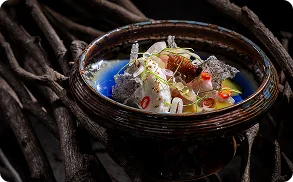
For those willing to try, it offers a nutty, umami burst not unlike a shrimp or a rich foie gras (truly!). For the less adventurous, simply seeing it pays respect to Sarawak’s culinary heritage of utilizing every resource.
Finally, dotted around the plate are tropical “pearls.” These might be tiny sago pearls or droplets of seaweed caviar – translucent orbs that gleam like pearls of the ocean. They encapsulate a sweet-tart, pandan-infused coconut nectar, popping in the mouth like sea spray. They serve as a reminder of the South China Sea’s briny pearls and the dewdrops on coastal foliage at dawn.
This Coast course is a vibrant tableau of seaside life: the raw fish freshness, the creamy coconut comfort, the crunch of sago, the surprising tang of ants, and the primal appeal of edible insects. Together, it sings a “coastal melody” of Sarawak.
As your narrator, I encourage you to embrace the spirit of the coast – be curious, be unafraid. In Sarawak’s food, nothing is wasted, and everything has a place – from tiny ant to mighty fish. By tasting this, you partake in an ages-old coastal tradition and demonstrate support for a future of sustainable eating.
Let the waves of flavour crash gently but persistently on your palate, as you imagine the fishermen, the sago harvesters, and the village storytellers by a beachside fire, sharing tales and treats from the day’s forage.
Swordfish
A firm, meaty fish prized for its mild flavor and dense texture.
Kesum Weaver Ants
Edible red ants used for their tangy flavor and cultural culinary significance in Borneo.
Tebaloi
(Sago Palm Cracker)
A crispy traditional Sarawakian biscuit made from sago flour and coconut.
Squid Ink
A dark, briny seafood extract known for its umami depth and visual drama.
Ulat Sagu (Sago Worm)
Nutritious larva of the sago palm, traditionally eaten in Sarawak as a delicacy.
Sago Pearls
Starchy pearls extracted from sago palm used for their chewy, gelatinous texture.
Seaweed Caviar
Plant-based alternative to fish roe made from seaweed with a briny burst.