DESSERT
Harmony (Black Rice, Matcha
& Coconut)

Every journey must end, and ours concludes on a sweet note of Harmony. Dessert is where we bring all the threads together – the land and sea, the past and future, Sarawak and Japan – in one exquisite finale. Titled simply “Harmony,” This dessert is a tableau of treats that each tell a story, yet sing together in unison.
Central to the plate is a petite square of Black Rice Kuih – inspired by kuih tai tai, a beloved Peranakan Nyonya dessert.
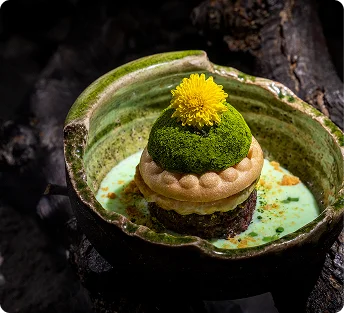
Traditionally, that kuih is blue, made from butterfly pea flowers, but here we have used black glutinous rice. The rice is soaked, gently steamed, then pounded and pressed overnight into a chewy, sticky rice cake. It carries a deep purple hue and a natural sweetness, symbolizing the ancient rice culture of the diverse ethnic groups of Sarawak. This chewy rice bite embodies patience and tradition – the overnight pressing mimics how the ancestors took time to perfect their treats, wasting nothing.
Beside it, you will see soft cubes of Matcha Warabi Mochi, a nod to our Japanese host nation. Warabi mochi is a jelly-like confection made from fern root starch; we infused ours with Uji matcha green tea, giving it a refined bitterness and jiggly, silky texture. Interestingly, its key ingredient comes from bracken fern, the same kind of plant as Sarawak’s jungle ferns – a subtle link between our cultures. This cool, slick mochi offers a contrast to the chewy rice cake, adding “a change of texture and sophistication.”
To the side, a quenelle of coconut sorbet sits on a crisp soy-caramel sablé cookie. The sorbet is bright and refreshing – made from the milk of coconuts, it’s like the essence of Bornean tropics distilled into ice. The sablé, a classic French buttery biscuit, has been reinvented with Malaysian gula apong and a touch of Japanese soy, baked to crumble delicately on the tongue. Together they provide creamy coldness and caramel crunch, a delightful East–West indulgence.
We finish with smears and dots of pandan cream – think of a fragrant pandanus-infused custard sauce, the colour of jade. Pandan leaf is a perfume of Southeast Asian desserts, and here it ties everything together aromatically, drizzled in artful strokes. A few edible flowers adorn the plate, elevating the elegance, because tonight is a celebration, after all.
Now take a bit of each element together – the toasty black rice, the cool mochi, the tropical sorbet and buttery cookie, with a swipe of pandan. The experience is complex yet comforting. It is our grand fusion finale, where Japanese elegance meets Sarawakian tradition, and even French technique finds its place. In your mouth, you might sense how these diverse components surprisingly complement each other – much like the many cultures of Sarawak living in harmony, or nations coming together at this Expo.
As you enjoy this dessert, we symbolically “bid a sweet farewell to Osaka, while Mulu (UNESCO Heritage Site) welcomes you with a warm embrace.” It is a parting gift – thanking our Japanese hosts with matcha’s bitterness (a sign of friendship, not goodbye) and inviting you into our world with the sweetness of coconut and pandan (the taste of our home).
Harmony is not just the name of the dish, but the theme of our entire evening – harmony between nature and cuisine, between tradition and innovation, between people and planet. Thank you for joining us on this Serumpun Sarawak journey. With each course, we have savoured a piece of Sarawak’s soul – from river whispers to forest flames, mountain mists to ocean sprays – all while upholding principles of sustainability and respect. It is our hope that you leave not only satiated but also inspired by the rich heritage and biodiversity of Sarawak that we strive to conserve and share.
In Sarawak, we say: “Terima kasih & semoga berjumpa lagi” – thank you, and until we meet again. Safe travels, and may the stories and flavours of tonight remain with you as warm memories.
Black Glutinous Rice
Sticky black rice rich in antioxidants and often used in Southeast Asian desserts.
Warabi Mochi
(Fern Root Starch)
Chewy jelly-like sweet made from bracken starch, popular in Japan.
Soy-Caramel Sablé Cookie
A buttery French shortbread cookie with umami-rich soy caramel.
Gula Apong
Natural palm sugar from nipa palms, smoky-sweet and native to Sarawak.
Pandan Leaf
Fragrant tropical leaf used to infuse food with a floral, vanilla-like aroma.